
Introduction
Space is very valuable today.
Many homes, shops, warehouses, and offices need extra space, but building a new floor can be expensive.
This is where a mezzanine floor becomes useful.
A mezzanine floor is a middle floor built between two main floors of a building. It creates extra space without constructing a full new level.
You can often see mezzanine floors in:
- Shopping malls
- Warehouses
- Factories
- Offices
- Restaurants
- Modern homes
It is a smart way to use vertical space inside a building.
This guide will explain everything in simple words.
You will learn:
- What a mezzanine floor is
- How it works
- Different types
- Where it is used
- Benefits and disadvantages
- Materials used
- Cost details
- Design tips
- Safety rules
What Is a Mezzanine Floor?
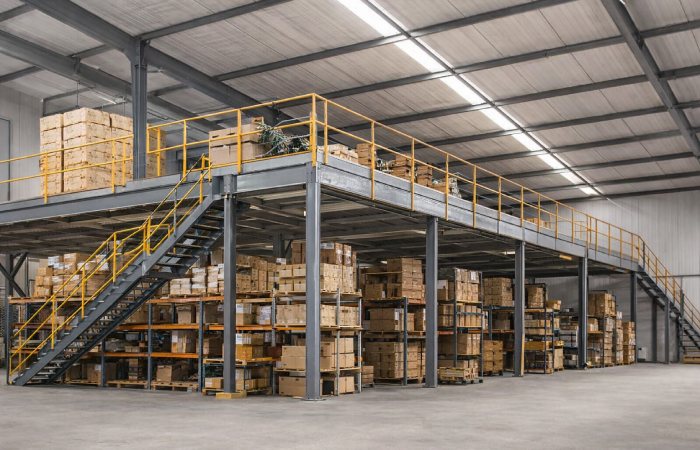
A mezzanine floor is a partial floor built between the ground floor and the ceiling of a building.
It does not cover the entire floor area like a normal floor.
Instead, it covers only a portion of the space.
Because of this, it is often called a semi-floor.
Simple Definition
A mezzanine floor is a small intermediate level inside a building used to create extra usable space.
According to the Encyclopaedia Britannica, a mezzanine is an intermediate floor between main floors of a building that does not occupy the entire floor space.
Example
Imagine a shop with a very high ceiling.
Instead of leaving the space empty, the owner builds a platform halfway up.
This platform becomes a mezzanine floor.
It can be used for:
- Storage
- Office work
- Display space
- Seating
Origin of the Word “Mezzanine”
The word mezzanine comes from the Italian word “Mezzano.”
Middle
That is why mezzanine floors are always between two levels.
Main Features of a Mezzanine Floor
| Feature | Description |
| Partial Floor | Does not cover the full building area |
| Built Inside Existing Space | No need to extend building outward |
| Quick Installation | Usually faster than building a new floor |
| Flexible Design | Can be customized for different uses |
| Cost Effective | Cheaper than full construction |
How a Mezzanine Floor Works
A mezzanine floor works by using unused vertical space.
Steps usually include:
- Measure ceiling height
- Design support structure
- Install beams and columns
- Add flooring panels
- Install stairs or ladder
- Add safety railings
Once finished, the area becomes a functional floor space.
Types of Mezzanine Floors

There are several types depending on purpose and structure.
1. Structural Steel Mezzanine
This is the most common type.
It uses strong steel beams to support the platform.
Features
- Very strong
- Durable
- Suitable for heavy loads
Used in
- Warehouses
- Factories
- Storage areas
2. Rack Supported Mezzanine
In this system, the mezzanine floor is supported by storage racks.
Features
- Saves space
- Combines storage and floor area
Used in
- Distribution centers
- Logistics warehouses
3. Shelf Supported Mezzanine
Shelves support the mezzanine structure.
This is common in small storage spaces.
4. Concrete Mezzanine
Some mezzanines are built using concrete slabs.
Advantages
- Very strong
- Long lifespan
Disadvantages
- Expensive
- Hard to modify
Wooden Mezzanine
Common in homes and cafes.
Features
- Attractive design
- Warm look
Comparison of Mezzanine Floor Types
| Type | Strength | Cost | Installation Speed | Best For |
| Steel | Very High | Medium | Fast | Warehouses |
| Rack Supported | High | Medium | Medium | Storage |
| Shelf Supported | Medium | Low | Fast | Small storage |
| Concrete | Very High | High | Slow | Permanent buildings |
| Wooden | Medium | Medium | Medium | Homes & cafes |
Where Mezzanine Floors Are Used
Mezzanine floors are used in many industries.
Warehouses
Warehouses often have very high ceilings.
Adding mezzanine floors helps create:
- Storage areas
- Packing stations
- Offices
Retail Stores
Retail stores use mezzanine floors for:
- Extra product displays
- Offices
- Customer seating
Factories
Factories use mezzanine floors for:
- Equipment platforms
- Staff areas
- Storage
Offices
In modern offices mezzanine floors are used for:
- Meeting rooms
- Workstations
- Relaxation spaces
Homes
Many modern homes use mezzanine floors as:
- Study rooms
- Bedrooms
- Libraries
Benefits of Mezzanine Floors
Saves Space
The biggest advantage is extra space without expanding the building.
Cost Effective
Building a mezzanine floor is cheaper than:
- Building a new floor
- Moving to a bigger building
Fast Installation
Many mezzanine floors can be installed in a few days or weeks.
Flexible Design
They can be:
- Expanded
- Modified
- Removed
Better Space Organization
They help organize:
- Storage
- Work areas
- Equipment
Disadvantages of Mezzanine Floors
Even though they are useful, they also have some limitations.
| Disadvantage | Explanation |
| Ceiling height required | Buildings must have high ceilings |
| Weight limitations | Some designs cannot carry heavy loads |
| Building permits | Some areas require legal approval |
| Reduced open space | Ground floor may feel smaller |
Materials Used in Mezzanine Floors
Different materials are used depending on purpose.
Steel
Steel is the most common material.
Advantages:
- Strong
- Durable
- Long lasting
Wood
Used mostly in homes and restaurants.
Advantages:
- Beautiful look
- Comfortable
Concrete
Used in permanent construction.
Advantages:
- Very strong
- Fire resistant
Comparison of Mezzanine Materials
| Material | Strength | Cost | Appearance | Maintenance |
| Steel | High | Medium | Industrial | Low |
| Wood | Medium | Medium | Warm | Medium |
| Concrete | Very High | High | Plain | Low |
Average Cost of Mezzanine Floors
Cost depends on many factors:
- Material
- Size
- Load capacity
- Design complexity
- Location
Approximate Cost Table
| Type | Average Cost per Square Foot |
| Steel Mezzanine | $20 – $40 |
| Wooden Mezzanine | $30 – $50 |
| Concrete Mezzanine | $50 – $100 |
Costs may vary by country.
Load Capacity of Mezzanine Floors
Load capacity means how much weight the floor can support.
| Type | Load Capacity |
| Light Duty | 125 – 250 kg per sqm |
| Medium Duty | 250 – 500 kg per sqm |
| Heavy Duty | 500 – 1000 kg per sqm |
Warehouses usually require heavy duty mezzanines.
Safety Features of Mezzanine Floors
Safety is very important.
Common safety features include:
- Guard rails
- Safety gates
- Anti-slip flooring
- Proper stairs
- Fire safety systems
Mezzanine Floor Design Tips
If you plan to build one, consider these tips.
Check Ceiling Height
Minimum recommended height:
4.5 – 5 meters
- Plan Access
Include:
- Stairs
- Ladders
- Lifts (for warehouses)
Ensure Proper Lighting
Upper levels need:
- Good lighting
- Air circulation
Follow Building Codes
Local rules may require:
- Permits
- Safety checks
Mezzanine Floor vs Normal Floor
| Feature | Mezzanine Floor | Normal Floor |
| Size | Partial | Full building |
| Construction cost | Lower | Higher |
| Installation time | Faster | Slower |
| Flexibility | High | Low |
| Structural complexity | Lower | Higher |
Mezzanine Floor vs Loft
Many people confuse these two.
| Feature | Mezzanine | Loft |
| Location | Between floors | Under roof |
| Purpose | Extra floor | Living space |
| Design | Open platform | Full room |
Mezzanine Floor in Modern Architecture
Modern architects love mezzanine floors because they:
- Make spaces look bigger
- Create stylish interiors
- Improve functionality
They are popular in:
- Minimalist homes
- Creative offices
- Coffee shops
Future of Mezzanine Floors
The demand for mezzanine floors is increasing because:
- Urban spaces are smaller
- Businesses need flexible layouts
- Warehouses require more storage
Modern mezzanine systems now include:
- Modular designs
- Lightweight materials
- Smart safety features
Conclusion
A mezzanine floor is a smart and practical solution to increase space inside a building.
Instead of expanding the building outward, it uses the unused vertical area.
They are widely used in:
- Warehouses
- Shops
- Offices
- Factories
- Homes
With benefits like low cost, quick installation, and flexible design, mezzanine floors have become an important part of modern building design.
However, proper planning, strong materials, and safety measures are essential to ensure durability and safety.
When designed correctly, a mezzanine floor can transform unused space into a productive and attractive area.
