

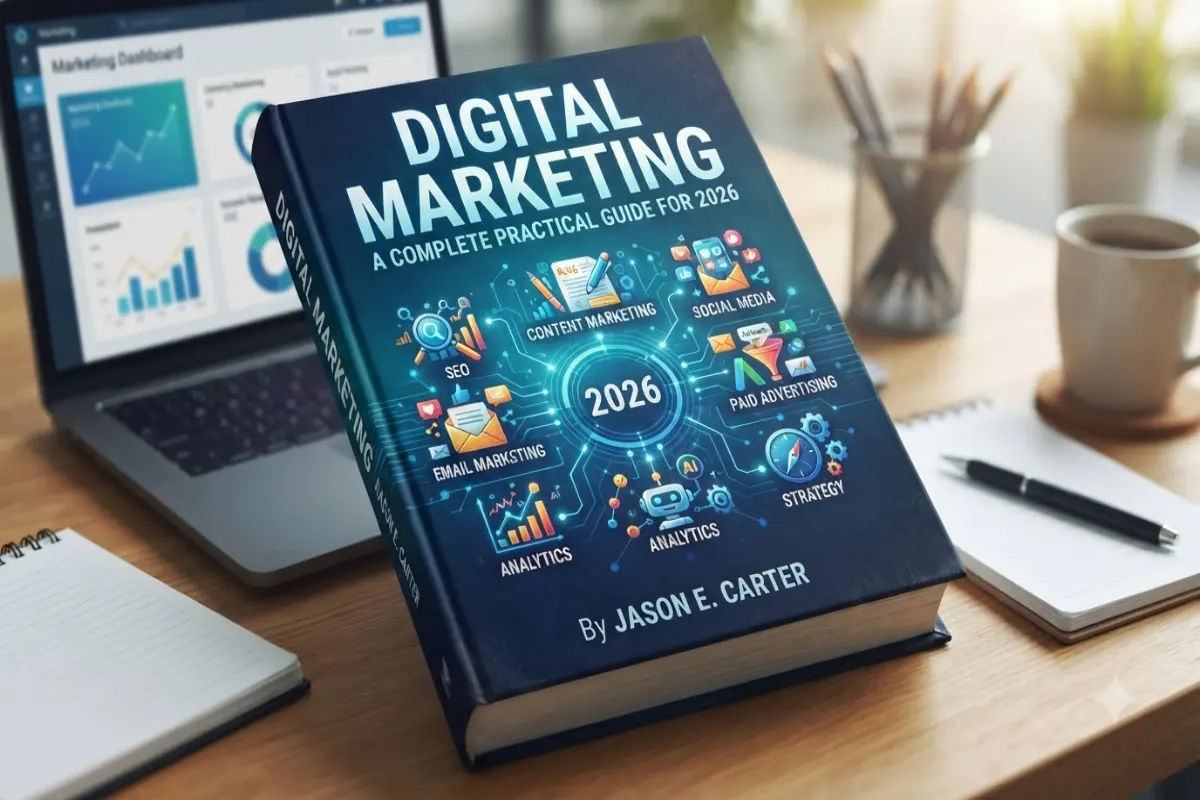
Digital marketing is simply the way businesses promote their products, services, or brand using the internet and digital devices. Instead of relying only on TV ads, billboards, or newspaper pages, companies reach people through search engines, social media, email, websites, and online ads. Everything happens on screens people already use every day—phones, laptops, tablets.
In 2026 this is how most companies find and keep customers. People research products online, read reviews, watch videos, and buy without ever stepping into a store. Digital marketing lets businesses talk to the right people at the right moment and measure almost every result in real time.
How digital marketing actually works
It follows a simple loop. First you understand who your ideal customer is and what problem they need solved. Then you show up where they spend time online with useful content or offers. You guide them from first awareness to taking action—signing up, buying, or contacting you. Finally you look at the data, see what worked, and adjust.
Unlike traditional ads that blast a message to everyone, digital marketing can target specific groups by age, location, interests, or past behavior. You can also test different versions of an ad or page quickly and keep the ones that perform better.
The main channels beginners should know
Most digital marketing sits on a handful of channels. You do not need to master all of them at once. Start with one or two that fit your audience.
| Channel | What it does | Best for beginners |
| SEO (Search Engine Optimization) | Get free traffic from Google and other search engines | Long-term growth, local businesses |
| Paid Search / PPC | Pay for ads that appear in search results | Fast results when you have budget |
| Social Media | Post content and run ads on Instagram, TikTok, LinkedIn, etc. | Brand awareness and engagement |
| Content Marketing | Create blogs, videos, guides that answer questions | Building trust and organic traffic |
| Email Marketing | Send messages to people who already gave their contact | Highest return on investment |
| Analytics | Measure traffic, clicks, sales, and behavior | Understanding what actually works |
Short-form video on TikTok, Instagram Reels, and YouTube Shorts remains one of the strongest ways to grab attention in 2026. Email still delivers strong returns—often $36 to $42 for every dollar spent—because you own the relationship with your audience.
Why it matters right now
Global digital advertising continues to grow, with spend heading toward hundreds of billions of dollars. In many countries digital now takes the majority of all advertising budgets. AI tools help write content, personalize messages, and optimize campaigns, so even small teams can do work that used to need bigger staffs. At the same time, search is changing. People increasingly get answers from AI overviews and chat tools, which means content needs to be clear, useful, and well-structured to get mentioned.
Skills and tools that help beginners
You do not need a marketing degree to start. Useful skills include:
- Understanding basic customer research
- Writing clear, helpful content
- Using free analytics tools
- Setting up simple campaigns
- Reading data and making small improvements
Common free or low-cost tools in 2026:
- Google Analytics 4 and Google Search Console for website data
- Google Ads and Meta Ads Manager for paid campaigns
- Canva for simple graphics and video
- Mailchimp or similar for email
- ChatGPT, Claude, or Gemini for drafting content and ideas (always review the output)
- HubSpot Academy, Google Skillshop, and Meta Blueprint for free training
Many people begin by claiming a Google Business Profile, posting consistently on one social platform, and tracking results with free tools.
Career path and pay
Digital marketing offers flexible entry points. Common starting roles are Digital Marketing Executive, SEO Executive, Social Media Coordinator, or Content Specialist. From there people move into specialist roles (SEO, paid ads, email) or broader manager positions.
Typical U.S. salary ranges in 2026 look roughly like this:
| Role | Entry-level | Mid-level | Senior |
| Digital Marketing Specialist | $42k–$60k | $60k–$90k | $90k–$130k |
| SEO or PPC Specialist | $45k–$65k | $65k–$100k | $95k–$140k |
| Social Media Manager | $40k–$55k | $55k–$85k | $80k–$120k |
| Marketing Manager | $50k–$70k | $85k–$130k | $140k–$165k+ |
Pay varies by location, industry, and whether you work in-house or at an agency. Specialists who understand data, AI tools, and measurable results tend to earn more. Job growth for marketing managers stays faster than average, with tens of thousands of openings projected each year.
How to start as a beginner
Pick one channel and learn it deeply for a few weeks instead of trying everything at once. Create a simple website or blog, set up free analytics, and run a small real project—even if it is for a local business or your own side idea. Document the results. Free certificates from Google, Meta, and HubSpot help, but a live project you can explain in an interview matters more.
Focus on solving real problems for real people. The tools and platforms will keep changing, but the core stays the same: understand your audience, show up helpfully where they already are, and use the data to get better over time. That practical approach is still the best way into digital marketing in 2026.
