

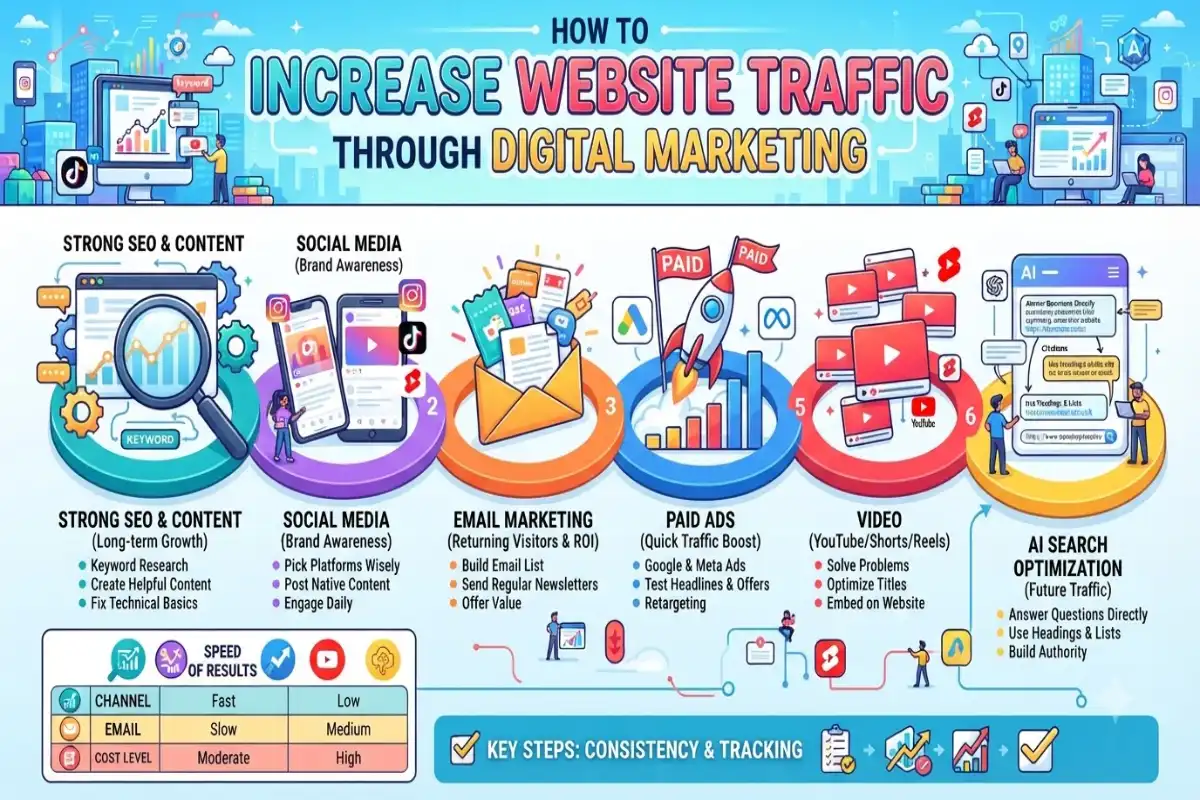
Getting more people to your website feels hard these days. Google changes things. People use AI tools more. Attention spans are short. But the good news is the basics still work if you do them right and stay consistent.
You do not need fancy tricks or huge budgets to start. Focus on a few solid digital marketing methods and build from there. This guide covers the practical ways that still bring real visitors in 2026.
Why Website Traffic Still Matterstal
More visitors mean more chances to get leads, sales, or email sign-ups. Organic search still drives a big share of traffic for most sites. Email and social help bring people back. Paid ads can give quick boosts when you need them.
The key is mixing channels so you are not stuck if one slows down. AI search is growing fast and sending some referral traffic, but regular search, content, and social still do the heavy lifting.
Main Ways to Grow Website Traffic
Here is a simple table showing the main channels, how fast they work, and what they cost roughly:
| Channel | Speed of Results | Cost Level | Best For | Main Benefit |
| SEO & Content | 3–6 months | Low to medium | Long-term growth | Steady free traffic |
| Social Media | Weeks to months | Low | Brand awareness | Free reach and shares |
| Email Marketing | Fast (days) | Low | Returning visitors | High conversion |
| Paid Ads (Google/Meta) | Hours to days | Medium to high | Quick traffic | Control and speed |
| Video (YouTube/Shorts) | 1–3 months | Low to medium | Engagement | High visibility |
| AI Search Optimization | 2–5 months | Low | Future traffic | Citations in AI answers |
Use this as a quick guide. Most sites do best when they combine two or three of these.
Start With Strong SEO and Content
Search engines still send the most reliable long-term traffic. Focus on creating content people actually search for.
Do Proper Keyword Research
Find what your audience types into Google. Look for questions and problems they have. Long-tail keywords (longer phrases) are often easier to rank for and bring more ready-to-act visitors.
Tools like Google Keyword Planner or free options help. Target words that match what you offer.
Create Helpful Content Regularly
Write posts that answer real questions. Make them clear and useful. Pillar pages (big guides) plus smaller related posts work well. This builds topical authority, which Google likes.
Update old posts every 6–12 months. Refreshing existing content often brings faster gains than writing new stuff from scratch.
Fix Technical Basics
Make sure your site loads fast, especially on mobile. Most traffic is mobile now. Improve Core Web Vitals. Use clear titles and meta descriptions so people click from search results.
Add internal links between your pages. This helps both users and search engines.
Use Social Media the Smart Way
Social can drive traffic, but only if you post with a clear goal.
Pick the platforms where your people hang out. Instagram, TikTok, and YouTube Shorts work great for short video. LinkedIn is strong for B2B. Facebook still reaches many.
Post native content. Short videos with a strong hook in the first second perform best. Always include a clear call to action and link when it makes sense.
Share your blog posts, but do not just drop a link. Tease the value first. Engage in comments and groups. Answer questions on Reddit or Quora with helpful replies that naturally point to your site.
Build and Use an Email List
Email is one of the highest ROI channels. People who already know you are more likely to visit again.
Offer something useful in exchange for an email address — a checklist, guide, or discount. Send regular newsletters with links to new content or offers. Keep it valuable, not just salesy.
Email traffic converts better than cold social traffic in most cases.
Try Paid Ads for Faster Results
When you need traffic now, paid ads help. Google Ads target people already searching. Meta (Facebook and Instagram) ads work well for interest-based reach.
Start small. Test different headlines and offers. Focus on high-intent keywords for search ads. Retarget people who visited your site before. This is usually cheaper and converts better.
Watch your costs. Paid traffic stops when you stop spending, so use it to support organic growth, not replace it.
Add Video to Your Mix
YouTube still gets huge numbers of visits. Short-form video on TikTok, Instagram Reels, and YouTube Shorts can drive traffic too if you put clear links in the description or bio.
Make videos that solve problems or show quick tips. Optimize titles and descriptions with keywords. Embed videos on your website pages to keep people there longer.
Optimize for AI Search (GEO)
More people get answers from ChatGPT, Perplexity, Gemini, and Google AI Overviews. Structure your content so these tools can cite you.
Write clear, direct answers. Use headings, lists, and simple language. Build authority with original insights and good sources. This new channel is still small but growing fast.
Track Everything and Improve
Use free tools like Google Analytics and Google Search Console. Look at:
- Which pages get the most traffic
- Where visitors come from
- Bounce rate and time on site
- What converts into leads or sales
Double down on what works. Fix or remove what does not. Test small changes often.
Common Mistakes to Avoid
Do not chase every new trend. Stick to consistent effort on proven channels. Do not create content without promoting it. Publishing alone is not enough. Do not ignore mobile users or slow page speed. And do not expect overnight results from SEO — it compounds over time.
Putting It All Together
Start with one or two channels based on your situation. New site with low budget? Fix technical SEO, create useful content, and post consistently on social. Established site stuck? Refresh old content, build email list, and try retargeting ads.
Aim for a mix. Organic search for steady growth. Social and email for engagement and return visits. Paid for speed when needed. Video and AI optimization for the future.
Consistency beats perfection. Publish helpful content. Promote it. Measure results. Adjust. Over a few months the traffic starts adding up.
More website traffic is not magic. It comes from showing up where your audience already looks for answers and making it easy for them to find you. Keep at it and the numbers will move.
